

Therapy for Constant Worrying in New York, NY
At Lift Up Live Well Mental Healthcare, Nerisa Bryan, NP, PMHNP, offers therapy for individuals dealing with constant worrying. Persistent anxiety and excessive worrying can disrupt daily life, but Nerisa helps patients understand the underlying causes and develop techniques for managing their thoughts. For more information, contact us or schedule an appointment online. We are conveniently located at 99 Main Street, Suite 216 Nyack, NY 10960.
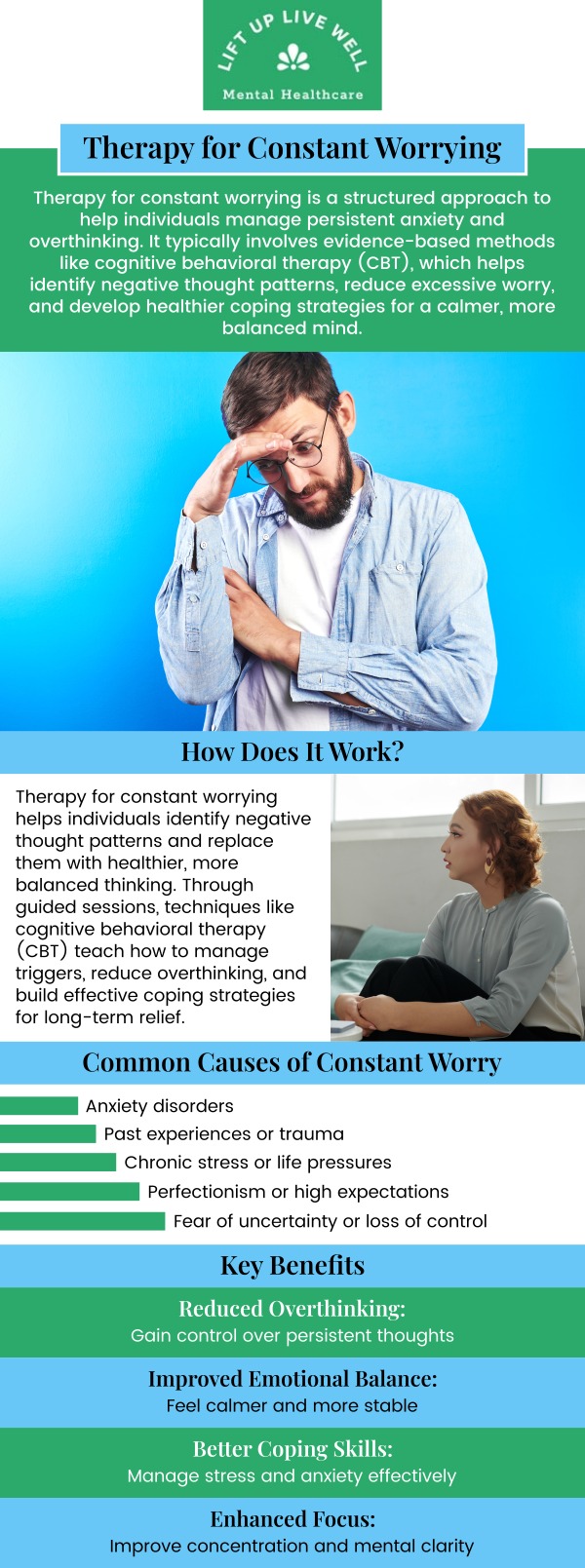
Table of Contents:
What types of therapy are recommended for constant worrying?
How do I know if my worrying is excessive or normal?
Can therapy reduce anxiety and constant worrying?
How long does therapy for worrying usually take?
Why Therapy with Nerisa Bryan, NP, PMHNP, is Essential for Managing Constant Worrying
Constant worrying is often linked to generalized anxiety patterns, and several therapeutic approaches can produce transformative results. Cognitive behavioral therapy is one of the most commonly recommended methods. In this therapy, individuals work closely with a provider to identify recurring mental loops that revolve around worst-case scenarios or exaggerated fears. Over time, patients begin to understand how automatic thoughts shape emotional reactions and physical tension. By learning to challenge unhelpful assumptions and replace them with more balanced perspectives, the intensity of chronic worry can gradually decrease. Another effective approach involves acceptance-based therapies. Instead of trying to force anxious thoughts away, individuals are guided to observe them with greater neutrality. This reduces the internal struggle that often amplifies worry. When the mind learns that anxious thoughts can exist without dictating behavior, a noticeable reduction in emotional reactivity often follows. Patients frequently report feeling less trapped by their thoughts and more capable of staying grounded in daily activities.
Mindfulness-centered therapy is also widely integrated into treatment plans. Breathing exercises, guided imagery, and grounding strategies help regulate the nervous system. Constant worrying often keeps the body in a heightened state of alert. Learning to calm that physiological response plays a significant role in long-term improvement. With consistent practice, patients develop the ability to recognize early signs of escalating worry and intervene before it intensifies.
The specialists at Lift Up Live Well Mental Healthcare in New York tailor therapy plans according to each individual’s experiences and goals. Under the guidance of Nerisa Bryan, NP, PMHNP, care is structured to address anxiety, mood disorders, stress-related concerns, and overlapping conditions such as PTSD or OCD, as required.
Worry is a natural human response to uncertainty, and to some extent, it can even be healthy. Most individuals experience occasional concern about work, relationships, health, or finances. Normal worry tends to be situation-specific and fades once the issue is resolved or addressed. It may feel uncomfortable in the moment, yet it does not consistently interfere with concentration, sleep, or daily functioning. Excessive worrying often feels persistent and difficult to control. Thoughts may shift rapidly from one concern to another, creating a sense of mental exhaustion. Even when one problem is resolved, another fear quickly takes its place. Individuals may struggle to relax, feel restless, or notice physical tension in the shoulders, jaw, or stomach. Sleep disturbances and irritability frequently accompany ongoing anxiety.
Another indicator involves the degree of impact on daily life. When worrying begins to affect work performance, relationships, or overall quality of life, further evaluation becomes appropriate. Some individuals avoid certain situations out of fear that something may go wrong. Others replay conversations repeatedly or anticipate negative outcomes despite reassurance. These patterns suggest that anxiety may be operating beyond normal levels.
At Lift Up Live Well Mental Healthcare, thorough assessments help clarify whether worry falls within expected stress reactions or aligns with generalized anxiety disorder. The clinical team takes time to explore symptom duration, severity, and life impact so that treatment recommendations reflect the individual’s unique experience.
Therapy can significantly reduce both the frequency and intensity of chronic worry. By addressing underlying thought patterns and emotional triggers, individuals gain practical tools to interrupt anxious cycles. Over time, therapy strengthens emotional resilience, allowing patients to approach uncertainty with greater steadiness. Many individuals notice that situations that once felt overwhelming begin to feel more manageable. Therapeutic progress often includes improved self-awareness. Patients learn to recognize how stress, fatigue, or unresolved experiences influence anxiety levels. This awareness supports earlier intervention when worry begins to rise. Instead of spiraling into prolonged rumination, individuals develop structured coping strategies that restore balance more quickly.
For some, medication may be considered alongside therapy to support symptom stabilization. When anxiety is severe or longstanding, combining psychotherapy with carefully monitored medication can create a more stable foundation for growth.
The specialists at Lift Up Live Well Mental Healthcare focus on long-term emotional health rather than temporary symptom relief. Patients receive compassionate, evidence-based care designed to promote steady improvement in mood, concentration, and overall well-being.
The length of therapy varies depending on the severity and duration of symptoms. Some individuals begin noticing improvement within several weeks, particularly when anxiety is linked to recent life stress. Short-term structured therapy programs may provide focused skill-building that reduces worry within a few months. For individuals who have experienced chronic anxiety for years, treatment may extend longer. Longstanding patterns often require deeper exploration of belief systems, coping habits, and past experiences. Progress tends to occur gradually as new skills become integrated into daily life. Consistency and engagement in sessions contribute significantly to overall improvement.
Providers at Lift Up Live Well Mental Healthcare offer personalized treatment plans and ongoing guidance. Individuals receive steady support aimed at helping them achieve lasting emotional balance and improved quality of life.
Therapy for constant worrying is available at Lift Up Live Well Mental Healthcare.
Nerisa Bryan, NP, PMHNP, is dedicated to providing therapy tailored to your unique needs. By identifying the triggers of constant worry and utilizing evidence-based therapeutic techniques, she helps you regain control over your thoughts. With her guidance, patients can learn how to reduce excessive worry, improve mental clarity, and focus on achieving a sense of calm. For more information, contact us or schedule an appointment online. We are conveniently located at 99 Main Street Suite 216 Nyack, NY 10960. We serve patients from Murray Hill NY, Manhattan NY, Lower Manhattan NY, Harlem NY, Hell’s Kitchen NY, Lenox Hill NY and surrounding areas of New Jersey.

ADDITIONAL SERVICES YOU MAY NEED

ADDITIONAL SERVICES YOU MAY NEED


 Send Text
 How May I Help You?