

How Can Anxiety Therapy Help After Experiencing Trauma?
At Lift Up Live Well Mental Healthcare, Nerisa Bryan, NP, PMHNP, helps individuals affected by trauma understand and manage the anxiety that often follows. Experiencing trauma can lead to heightened anxiety, panic attacks, and a constant state of alertness. Through therapy, Nerisa helps patients process their experiences, reduce anxiety, and regain a sense of control over their lives. For more information, contact us or schedule an appointment online. We are conveniently located at 99 Main Street, Suite 216 Nyack, NY 10960.
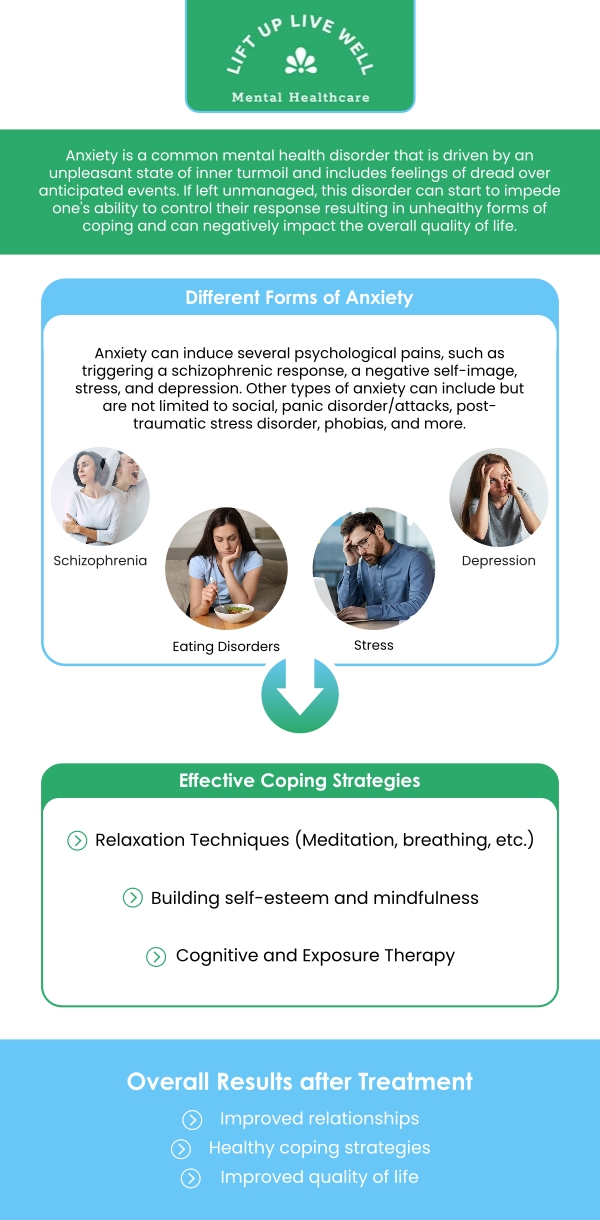
Table of Contents:
How does anxiety therapy help after trauma?
What are the signs that trauma has led to anxiety?
How long after a traumatic event should someone seek therapy for anxiety?
What types of therapy are used for trauma-related anxiety?
Why Anxiety Therapy with Nerisa Bryan, NP, PMHNP, Is Essential After Trauma
After a traumatic experience, the nervous system can remain in a heightened state of alert long after the event has passed. Anxiety therapy helps regulate that response by creating a structured and supportive environment where the individual can safely process what occurred. Trauma often fragments memory and emotion, leaving the person feeling overwhelmed by reminders or sudden waves of fear. Through guided therapeutic work, those reactions are gradually explored and understood rather than avoided. Therapy also helps reconnect thoughts, emotions, and physical sensations that may feel disconnected after trauma. Many individuals experience hypervigilance, difficulty sleeping, or exaggerated startle responses. Anxiety-focused treatment teaches grounding skills that calm the body and reduce the intensity of these stress responses. Over time, the nervous system begins to stabilize.
Another important aspect involves reframing beliefs that developed after the traumatic event. Trauma can alter how a person views the world, themselves, and others. Feelings of guilt, shame, or constant danger may persist. Therapy supports the individual in examining these beliefs with care and replacing them with perspectives rooted in present reality rather than past threat.
At Life Up Lift Up Live Well Mental Healthcare in New York, trauma and anxiety treatment is guided by Nerisa Bryan, NP, PMHNP. The specialists focus on compassionate, individualized care that addresses both the emotional aftermath of trauma and the physical stress patterns that follow it.
When trauma contributes to anxiety, symptoms often extend beyond ordinary stress reactions. Individuals may experience intrusive memories, flashbacks, or distressing dreams related to the event. Even reminders such as sounds, locations, or conversations can trigger intense fear or unease. The body may respond as if the danger is happening again, even when the present environment is safe. In many cases, the individual will feel constantly on edge, scanning surroundings for potential threats. Concentration may decline, and sleep disturbances can become frequent. Irritability and emotional numbness sometimes alternate, leaving the person feeling disconnected from others. Avoidant behaviors also signal trauma-related anxiety. Some individuals steer clear of certain places, conversations, or activities that remind them of what happened. While avoidance may reduce distress temporarily, it often reinforces fear in the long term. Physical symptoms such as muscle tension, rapid heartbeat, or gastrointestinal discomfort may accompany emotional distress.
The specialists at Lift Up Live Well Mental Healthcare conduct careful evaluations to determine whether anxiety symptoms are rooted in unresolved trauma. By exploring timing, symptom patterns, and emotional triggers, a clearer understanding of the connection between past events and present anxiety can emerge.
How long after a traumatic event an individual should seek therapy varies depending on the individual’s response to the event. In the days or weeks immediately following trauma, heightened anxiety and emotional fluctuation can be part of a normal stress response. Many individuals gradually regain stability as they process the experience naturally with support from family and community. However, individuals should never hesitate to seek care if they feel it is required. In instances where anxiety symptoms persist beyond several weeks, intensify, or interfere with daily functioning, professional support becomes an essential step. Ongoing sleep disruption, intrusive memories, avoidance behaviors, or emotional numbness suggest that the nervous system remains unsettled. Early intervention often prevents symptoms from becoming more deeply ingrained.
Some individuals delay seeking therapy for months or even years, believing they should be able to manage alone. Trauma-related anxiety can surface long after the event, particularly during life transitions or additional stress. Seeking care at any stage remains appropriate, whether symptoms are recent or longstanding.
Lift Up Live Well Mental Healthcare provides timely access to mental health services for individuals navigating trauma-related anxiety. Patients receive thorough assessment and individualized treatment planning aimed at restoring emotional steadiness.
Several therapeutic approaches are commonly used to address anxiety that stems from trauma. Cognitive behavioral therapy adapted for trauma helps individuals examine distressing thought patterns connected to the event. This approach focuses on reducing avoidance and reshaping beliefs that perpetuate fear. Gradual exposure techniques may also be incorporated to decrease sensitivity to triggers in a controlled and supportive setting.
Eye movement desensitization and reprocessing therapy is another evidence-based method frequently used for trauma. This technique involves guided bilateral stimulation while the individual recalls aspects of the traumatic memory. Over time, the emotional charge associated with the memory often decreases, allowing it to be integrated without overwhelming distress.
Somatic-based therapies can also be incorporated as appropriate. Trauma frequently resides in the body as well as the mind. Techniques that increase awareness of physical sensations help release stored tension and support nervous system regulation. Mindfulness practices and grounding exercises are often integrated to strengthen present moment stability.
At Lift Up Live Well Mental Healthcare, treatment plans are tailored to the individual’s history and comfort level. The specialists combine evidence-based therapies with compassionate care, helping patients move beyond persistent fear and toward renewed emotional balance and well-being.
Trauma and anxiety treatment are available at Lift Up Live Well Mental Healthcare.
Nerisa Bryan, NP, PMHNP, uses evidence-based therapy techniques such as EMDR, CBT, and mindfulness to support those who have experienced trauma. With personalized care, Nerisa provides a safe space for patients to heal emotionally, reduce anxiety, and regain confidence in their ability to cope with the challenges that trauma presents. For more information, contact us or schedule an appointment online. We are conveniently located at 99 Main Street Suite 216 Nyack, NY 10960. We serve patients from Murray Hill NY, Manhattan NY, Lower Manhattan NY, Harlem NY, Hell’s Kitchen NY, Lenox Hill NY and surrounding areas of New Jersey

ADDITIONAL SERVICES YOU MAY NEED

ADDITIONAL SERVICES YOU MAY NEED


 Send Text
 How May I Help You?