

What Is a Sleep Disorder?
A sleep disorder is a condition that affects the ability to sleep well regularly. Common sleep disorders include insomnia, sleep apnea, restless leg syndrome, and narcolepsy. Symptoms may include difficulty falling asleep, staying asleep, or waking up too early. Sleep disorders can lead to daytime fatigue, irritability, and concentration problems. At Lift Up Live Well Mental Healthcare, Nerisa Bryan, NP, PMHNP, offers comprehensive treatment for various sleep disorders. Proper diagnosis and treatment are crucial to improving sleep and overall health. For more information, contact us or schedule an appointment. We are conveniently located at 99 Main Street Suite 216 Nyack, NY 10960.
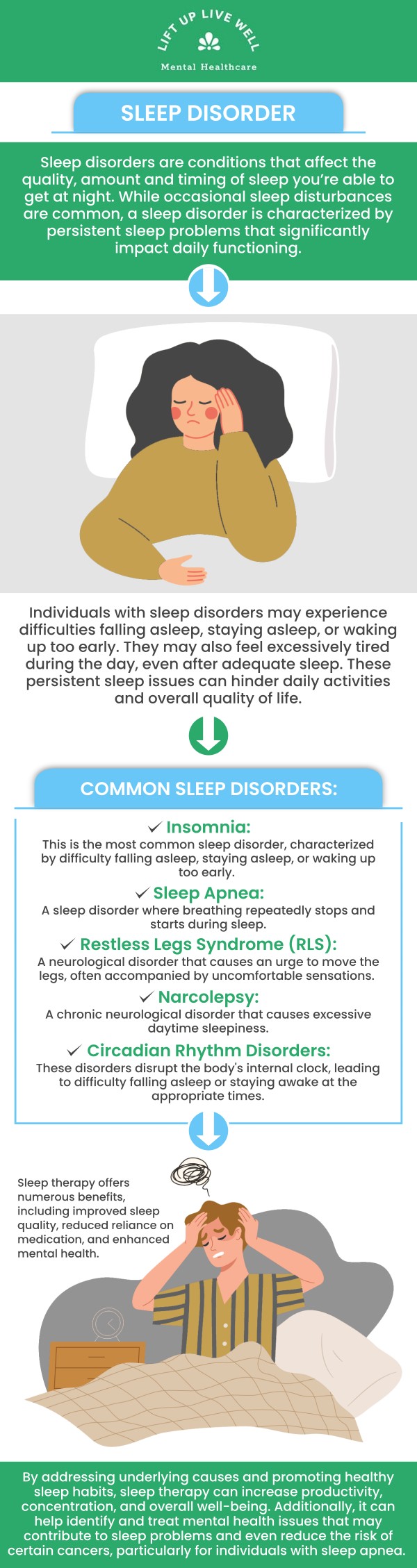
Table of Contents:
What are the common types of sleep disorders?
What are the symptoms of a sleep disorder?
How do I know if I have a sleep disorder?
What causes sleep disorders?
Can stress cause sleep disorders?
How is a sleep disorder diagnosed?
Understanding and Managing Sleep Disorders with Nerisa Bryan, NP, PMHNP
At Lift Up Live Well Mental Healthcare, we understand that sleep is a crucial component of mental wellness. Sleep disorders are a group of conditions that can significantly impact your ability to get restful sleep regularly, and in turn, can affect your mood, emotional stability, and overall mental health. Here are the common types of sleep disorders:
● Insomnia: Difficulty falling asleep or staying asleep, leading to daytime fatigue.
● Sleep Apnea: Interruption of breathing during sleep often leads to loud snoring and gasping for air.
● Restless Leg Syndrome (RLS): An uncontrollable urge to move the legs, often accompanied by uncomfortable sensations, typically at night.
● Narcolepsy: Excessive daytime sleepiness and sudden, uncontrollable episodes of falling asleep during the day.
● Circadian Rhythm Disorders: Disruptions to the body’s natural sleep-wake cycle, including conditions like shift work sleep disorder and jet lag.
● Parasomnias: Involves abnormal behaviors during sleep, such as sleepwalking, night terrors, or sleep talking.
● REM Sleep Behavior Disorder (RBD): Acting out dreams during REM sleep often leads to violent movements or speaking.
● Hypersomnia: Excessive sleepiness during the day despite getting enough sleep at night.
Recognizing and addressing sleep disorders is essential, not only for your physical health but also for your mental and emotional well-being. If you are experiencing sleep difficulties that are affecting your mood, energy, or daily functioning, the dedicated team at Lift Up Live Well Mental Healthcare is here to help. Our clinician is experienced in diagnosing and treating sleep-related issues, and offers comprehensive support to improve both your sleep and your mental health.
At Lift Up Live Well Mental Healthcare, we understand that sleep is a cornerstone of emotional and mental wellness. Sleep disorders are more than just an occasional restless night—they can significantly impact your mental health, daily functioning, and overall quality of life. Here are the common symptoms of a sleep disorder:
● Difficulty Falling or Staying Asleep: Struggling to fall asleep or waking up frequently during the night.
● Daytime Fatigue: Feeling excessively tired or sleepy during the day, even after a full night’s sleep.
● Loud Snoring: Snoring that is loud enough to disturb your own or others’ sleep, which may indicate sleep apnea.
● Gasping for Air During Sleep: Frequently waking up gasping for air is a common sign of sleep apnea.
● Restless Legs or Uncomfortable Sensations: An uncontrollable urge to move your legs, typically accompanied by uncomfortable feelings, especially when lying down at night (Restless Leg Syndrome).
● Frequent Nightmares or Night Terrors: Experiencing vivid dreams or waking up in a panic during the night, sometimes with physical reactions like sweating or heart palpitations.
● Difficulty Concentrating: Struggling to focus or experiencing memory problems due to lack of restorative sleep.
● Irritability or Mood Swings: Feeling more irritable or having mood swings due to poor sleep quality.
● Falling Asleep During the Day: Unexpectedly falling asleep during the day, even in inappropriate situations (Narcolepsy).
● Inconsistent Sleep-Wake Cycle: Having difficulty maintaining a regular sleep schedule, such as trouble adjusting to different time zones or work shifts.
If you or a loved one is experiencing these symptoms regularly, we are here to help. At Lift Up Live Well Mental Healthcare, we provide comprehensive assessment, diagnosis, and personalized treatment plans for sleep disorders, with a special focus on how sleep affects your mental health.
Recognizing a sleep disorder typically involves identifying consistent patterns of poor sleep quality or disruptions that affect daily life. Common signs include difficulty falling asleep or staying asleep, waking up frequently during the night, or feeling excessively tired during the day despite spending adequate time in bed. If you often feel restless or struggle with focus and concentration due to fatigue, these could also indicate a sleep disorder. Additionally, physical symptoms like loud snoring, gasping for air, or uncomfortable sensations in your legs during sleep are warning signs of specific conditions like sleep apnea or restless leg syndrome.
To determine if you have a sleep disorder, it’s important to assess how your sleep patterns impact your overall health and quality of life. If you experience any of the symptoms mentioned above, or if your sleep is consistently affecting your mood, productivity, or relationships, it’s a good idea to seek professional advice. A healthcare provider, like Nerisa Bryan, NP, PMHNP, at Lift Up Live Well, can evaluate your symptoms, conduct sleep assessments, and guide you toward the right treatment options to improve your sleep and restore your well-being.
If you have experienced these symptoms regularly for more than a few weeks, or if sleep problems are disrupting your daily life, we encourage you to reach out. Our experienced providers can help identify whether you may be experiencing a sleep disorder—such as insomnia, sleep apnea, or restless legs syndrome—and work with you to develop a personalized treatment plan.
At Lift Up Live Well Mental Healthcare, we understand that sleep disorders can significantly impact your emotional well-being and overall quality of life. Sleep disorders disrupt the normal patterns of sleep, affecting both the quality and quantity of rest you receive. Here are the common causes of sleep disorders:
● Stress and Anxiety: Ongoing stress or anxiety can make it difficult to relax, leading to trouble falling or staying asleep.
● Depression: Mental health conditions like depression can disrupt sleep patterns, causing insomnia or excessive sleeping.
● Poor Sleep Hygiene: Unhealthy sleep habits, such as inconsistent sleep schedules, excessive screen time before bed, or consuming caffeine late in the day, can interfere with quality sleep.
● Medical Conditions: Conditions such as asthma, arthritis, or heart disease can cause discomfort and disrupt sleep. Sleep disorders like sleep apnea are also linked to conditions like obesity or high blood pressure.
● Hormonal Changes: Fluctuations in hormones, especially during pregnancy, menopause, or puberty, can lead to sleep disturbances.
● Chronic Pain: Persistent pain, from conditions like fibromyalgia or back problems, can make it difficult to sleep soundly.
● Medications: Certain medications, including stimulants or medications for high blood pressure or depression, can interfere with sleep.
● Environmental Factors: Noisy surroundings, uncomfortable temperatures, or light exposure can all contribute to poor sleep quality.
● Genetics: Some sleep disorders, like narcolepsy, can be inherited and may run in families.
● Substance Abuse: Alcohol, nicotine, or drug use can disrupt sleep patterns and increase the likelihood of sleep disorders.
At Lift Up Live Well Mental Healthcare, our team is dedicated to identifying and addressing the root causes of your sleep difficulties. We recognize that every person’s experience with sleep is unique, and we approach assessment and treatment holistically.
At Lift Up Live Well Mental Healthcare, we understand that stress can significantly impact your sleep, contributing to a variety of sleep disorders. Stress triggers the release of hormones like cortisol and adrenaline, which activate the body’s “fight or flight” response. While this natural response is helpful in short bursts, prolonged or chronic stress can disrupt your body’s ability to relax and fall asleep. Insomnia is one of the most common sleep disorders linked to stress, as racing thoughts, anxiety, and worry can prevent you from unwinding at night.
Many individuals struggling with stress find it difficult to stay asleep or achieve restful sleep, often leading to a vicious cycle. The lack of sleep worsens stress, creating a feedback loop that negatively affects both mental and physical well-being. This cycle can lead to further anxiety, irritability, and physical fatigue. At Lift Up Live Well, we focus on breaking this cycle by addressing both the underlying stress and the sleep issues it causes, offering a comprehensive approach that includes relaxation techniques and therapeutic support.
Stress not only leads to insomnia but can also contribute to other sleep disturbances, such as restless sleep, nightmares, or even exacerbating existing conditions like sleep apnea. At Lift Up Live Well, we take a holistic approach to treatment, helping clients manage stress through personalized coping strategies like mindfulness, relaxation techniques, and therapeutic interventions. By addressing stress and sleep issues together, we empower our clients to improve both their mental health and their sleep quality, leading to better overall well-being.
At Lift Up Live Well Mental Healthcare, diagnosing a sleep disorder starts with an in-depth consultation to understand your sleep patterns, daily habits, and overall health. Our mental health specialists, led by Nerisa Bryan, NP, PMHNP, conduct a thorough review of your medical history and any psychological factors that may contribute to sleep issues. This process often includes discussing factors like stress, anxiety, depression, and lifestyle choices that could be affecting your sleep.
As part of the diagnostic process, we may ask you to keep a sleep diary to track your sleep patterns over several weeks. This diary helps us identify common trends, triggers, or environmental factors influencing your sleep. In addition to your sleep diary, we may also conduct specific sleep assessments or questionnaires to evaluate how your symptoms affect your daily functioning and quality of life. In some cases, if necessary, we may refer you for a sleep study (polysomnography) to monitor your sleep stages, breathing patterns, and brain activity overnight.
Once we have gathered all the relevant information, we use a holistic approach to accurately diagnose the sleep disorder. This comprehensive assessment enables us to develop a personalized treatment plan tailored to your specific needs. Whether the solution involves behavioral therapy, lifestyle changes, or referral to a sleep specialist, our goal at Lift Up Live Well is to ensure that you receive the right support to improve your sleep quality and overall mental well-being.
Sleep disorders are a common issue affecting many individuals, impacting both physical and mental health. At Lift Up Live Well Mental Healthcare, Nerisa Bryan, NP, PMHNP, provides compassionate care to those struggling with various sleep disorders, such as insomnia, sleep apnea, and restless leg syndrome. Through a personalized approach, Nerisa works to identify the root causes of these disorders, whether they stem from stress, anxiety, or underlying medical conditions. Understanding the symptoms and triggers of sleep disturbances is the first step toward effective treatment.
Managing sleep disorders involves a combination of behavioral therapy, lifestyle modifications, and, when appropriate, medication. Nerisa Bryan specializes in creating tailored treatment plans that help patients improve their sleep hygiene and adopt healthier sleep patterns. Nerisa ensures that each patient receives the comprehensive care they need to achieve better sleep and overall well-being.
For more information, contact us or schedule an appointment. We are conveniently located at 99 Main Street Suite 216 Nyack, NY 10960. We serve patients from Murray Hill NY, Manhattan NY, Lower Manhattan NY, Harlem NY, Hell’s Kitchen NY, Lenox Hill NY and surrounding areas of New Jersey.

ADDITIONAL SERVICES YOU MAY NEED

ADDITIONAL SERVICES YOU MAY NEED



 Send Text
 How May I Help You?