

Anxiety Disorders – Diagnosis and Treatment in New York, NY
At Lift Up Live Well in New York, NY, Nerisa Bryan, NP, PMHNP, specializes in diagnosing and treating anxiety disorders. From generalized anxiety disorder (GAD) to panic disorder, we offer comprehensive care tailored to each individual’s needs. Our treatment approach may include therapy, medication, and lifestyle changes to effectively manage anxiety and improve your quality of life. For more information or to schedule an appointment, contact us or book online.
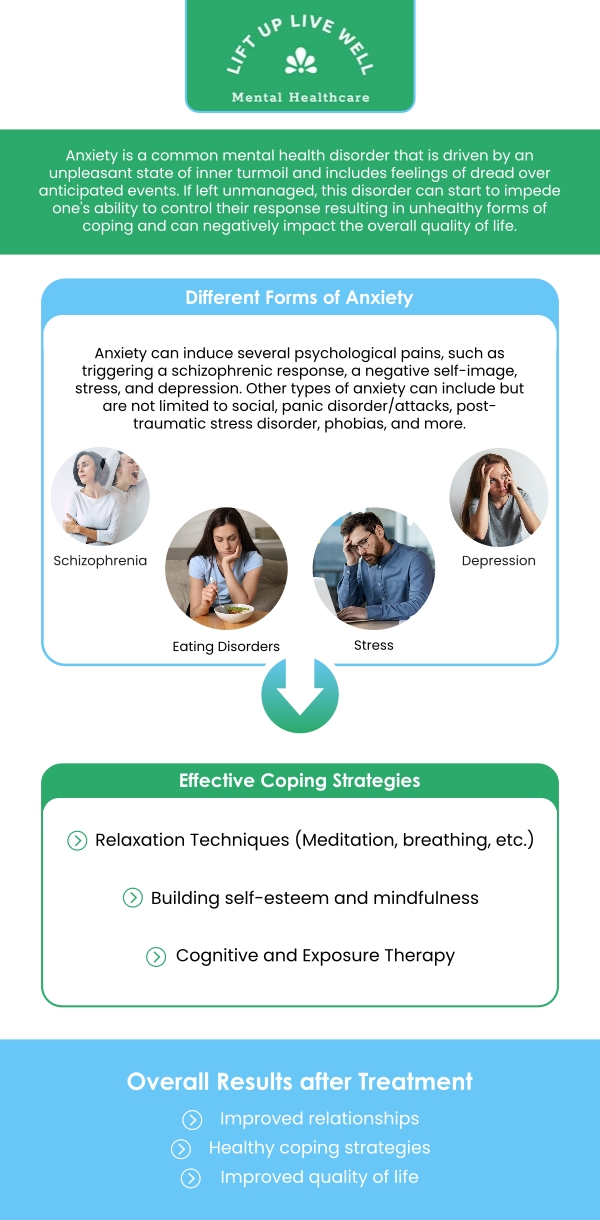
Table of Contents:
What are the common types of anxiety disorders?
How can I tell if I have an anxiety disorder?
What are the treatment options for anxiety disorders?
What is cognitive‑behavioral therapy (CBT) for anxiety?
How Does Nerisa Bryan, NP, PMHNP, Approach the Diagnosis and Treatment of Anxiety Disorders in New York, NY?
Anxiety is more than occasional worry or stress—for many people, it can develop into a clinical anxiety disorder that affects daily functioning and quality of life. Several types of anxiety disorders are commonly diagnosed:
● Generalized Anxiety Disorder (GAD): People with GAD experience persistent, excessive worry about everyday concerns—such as work, health, or family—that is difficult to control. Symptoms often include restlessness, fatigue, difficulty concentrating, and muscle tension.
● Panic Disorder: Characterized by recurrent panic attacks, which are sudden episodes of intense fear accompanied by physical symptoms like heart palpitations, sweating, trembling, and shortness of breath. Individuals may develop fear of future attacks, which can interfere with daily life.
● Social Anxiety Disorder: This involves intense fear or anxiety about being judged, embarrassed, or humiliated in social situations. It can significantly limit social interactions, public speaking, eating in public, or engaging with others.
● Specific Phobias: These are strong, irrational fears of a specific object or situation — such as heights, spiders, flying, or needles — leading individuals to go out of their way to avoid triggers.
● Separation Anxiety Disorder: Although often associated with children, adults can also experience intense anxiety about being separated from loved ones or familiar settings.
● Agoraphobia: This involves fear of being in places where escape might be difficult or help may not be available, such as crowded areas or open spaces. Some people with agoraphobia avoid leaving home entirely.
Anxiety disorders fall on a spectrum, and symptoms can vary widely between individuals. What they share in common is disproportionate fear or worry that interferes with daily functioning.
Recognizing anxiety can be challenging because many symptoms overlap with normal stress responses. However, signs that anxiety may be more than occasional worry include:
● Persistent Worry: Anxiety that lasts most days for six months or more and feels difficult to control.
● Physical Symptoms: Unexplained physical symptoms such as:
● Rapid heartbeat
● Muscle tension
● Headaches
● Gastrointestinal discomfort
● Avoidance Behavior: Actively avoiding situations, places, or activities because of fear or anxiety.
● Interference With Functioning: Worry or fear interferes with work, school, relationships, or daily tasks.
● Excessive Reaction to Stress: Feeling overwhelmed by situations that wouldn’t normally be distressing to others.
● Sleep Disruption: Difficulty falling asleep, staying asleep, or getting restful sleep due to racing thoughts or anxiety.
If you find that your anxiety is persistent, intense, or interfering with your life, it’s worth seeking a professional evaluation. Mental health professionals use structured interviews and screening tools to determine whether symptoms meet the criteria for a clinical anxiety disorder.
Anxiety disorders are highly treatable, and there are multiple evidence‑based approaches that can significantly reduce symptoms and improve quality of life. Treatment plans are individualized and may include one or more of the following:
1. Psychotherapy: Therapy is a cornerstone of anxiety treatment. It can help you understand triggers, reframe unhelpful thought patterns, and learn coping strategies.
● Cognitive‑Behavioral Therapy (CBT): One of the most researched and effective therapies for anxiety.
● Exposure Therapy: Helps patients gradually face feared situations in a safe way.
● Mindfulness‑Based Therapies: Encourage present‑moment awareness and reduce rumination.
2. Medication: For some individuals, medication can reduce symptoms enough to make therapy more effective. Common medications include:
● Antidepressants (e.g., SSRIs, SNRIs)
● Anti‑anxiety medications
● Beta‑blockers for specific situations, like performance anxiety
Medication decisions are made collaboratively, considering your symptoms, medical history, and preferences.
3. Lifestyle and Support: Lifestyle changes can support recovery:
● Regular physical activity
● Sleep hygiene
● Stress‑management techniques
● Support groups or peer support
4. Holistic Supports: Some people benefit from approaches like yoga, meditation, or guided breathing exercises—especially when used alongside traditional treatment.
A combination of therapy, medication, and lifestyle support often produces the best results.
Cognitive‑Behavioral Therapy (CBT) is a structured, goal‑oriented therapy that helps you understand the link between thoughts, emotions, and behaviors. For anxiety disorders, CBT focuses on:
● Identifying Unhelpful Thoughts: Realizing when your thoughts become exaggerated, catastrophic, or unrealistic.
● Challenging and Reframing Thoughts: Learning to replace anxious thinking with more balanced, evidence‑based thinking.
● Behavioral Techniques: Practicing gradual exposure to feared situations to reduce avoidance and fear responses over time.
● Skill Building: Developing tools for coping with anxiety — such as breathing exercises, relaxation strategies, and problem‑solving skills.
CBT is widely supported by research and can lead to lasting changes that help reduce anxiety symptoms and prevent relapse. It’s typically delivered in weekly sessions over several weeks or months, and progress is regularly reviewed.
At Lift Up Live Well Mental Healthcare, Nerisa Bryan, NP, PMHNP, takes a compassionate, individualized approach to diagnosing and treating anxiety disorders. Rather than relying solely on symptom checklists, she considers the whole person — including your history, current challenges, strengths, and goals.
Her approach typically includes:
Collaborative Treatment Planning: She believes in working together with you to define your treatment goals. She will identify the best strategies for your recovery, whether through therapy, medication, or a combination of both. This ensures that the plan is personalized to your needs and preferences.
Evidence-Based Therapies: Nerisa utilizes proven therapies to help you develop practical coping skills. These therapies focus on reducing anxiety by helping you manage thoughts, behaviors, and situations that contribute to stress, anxiety, and worry.
Supportive Care Across the Continuum: She prioritizes ongoing support through regular follow-ups and adjustments to your treatment plan. As anxiety can evolve over time, she ensures that your care evolves as well, providing continual guidance and support throughout your journey.
Focus on Resilience and Empowerment” Instead of simply managing symptoms, Nerisa focuses on building resilience. This involves helping you strengthen your coping skills, improving your ability to handle stress, and empowering you to navigate life’s challenges with confidence.
Throughout treatment, the focus is on creating a safe, non‑judgmental space where you can explore your experiences and develop personalized strategies that contribute to meaningful, long‑term relief. For more information or to schedule an appointment, contact us or book online. We serve patients from Murray Hill NY, Manhattan NY, Lower Manhattan NY, Harlem NY, Hell’s Kitchen NY, Lenox Hill NY and surrounding areas of New Jersey.

ADDITIONAL SERVICES YOU MAY NEED

ADDITIONAL SERVICES YOU MAY NEED



 Send Text
 How May I Help You?