

How Is ADHD in Adults Different from Childhood ADHD?
At Lift Up Live Well Mental Healthcare, Nerisa Bryan, NP, PMHNP, helps patients understand how ADHD differs between adults and children. Adult ADHD often affects focus, organization, and emotional regulation. Proper evaluation supports accurate diagnosis and care planning. For more information, contact us or schedule an appointment online. online. We are conveniently located at 99 Main Street Suite 216 Nyack, NY 10960.
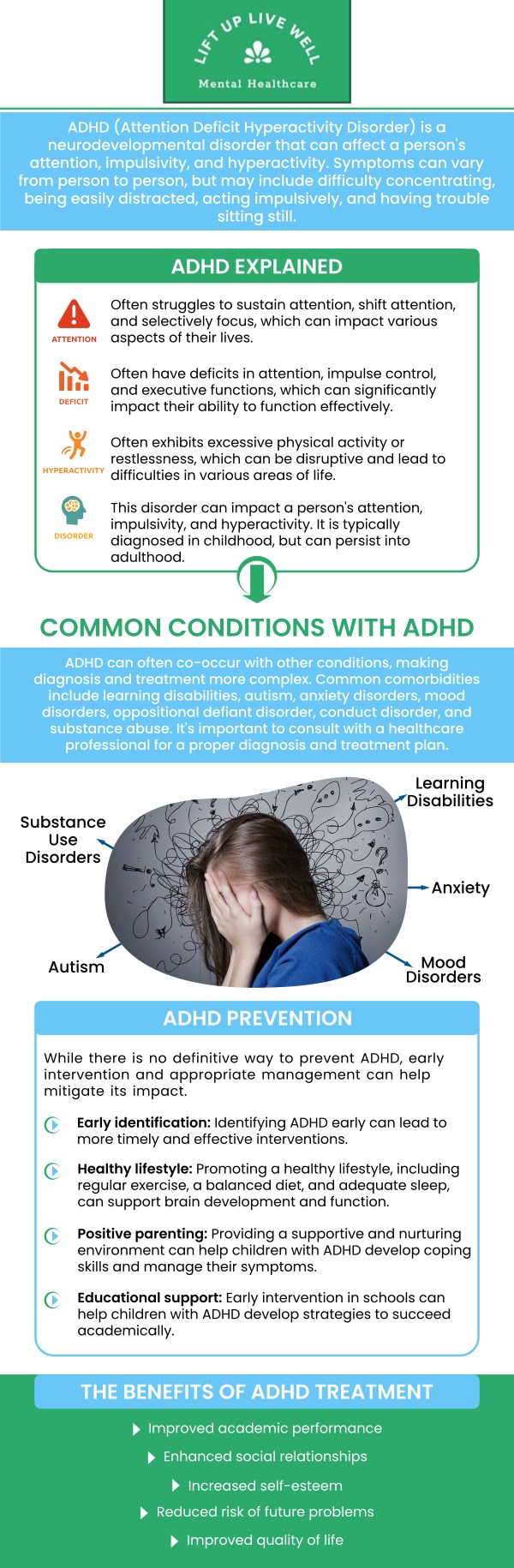
Table of Contents:
How does ADHD in adults differ from childhood ADHD?
Can adults with ADHD experience fewer hyperactive symptoms?
How does ADHD affect social relationships in adults compared to children?
How do adults manage ADHD differently from children?
How Nerisa Bryan, NP, PMHNP, Helps You Manage Adult ADHD with Compassion and Expertise
In adults, ADHD often presents in a more internalized way than what is typically seen in childhood. While children are frequently identified through outward behaviors such as constant movement and difficulty staying still, adults tend to experience symptoms that are integrated into daily responsibilities and internal thought patterns. Challenges with focus may show up as difficulty sustaining attention at work, trouble completing long-term projects, or a persistent sense of mental restlessness that does not always translate into physical hyperactivity. Over time, many adults have learned to mask these struggles, which can make the condition less visible.
When attention regulation is inconsistent, adult pressures such as employment, finances, or relationship responsibilities can create a chronic sense of being overwhelmed or behind, even in individuals who appear outwardly successful. Emotional regulation can also become a more prominent concern in adulthood, with frustration tolerance and stress responses playing a larger role than they might in younger years.
Another difference lies in how symptoms are interpreted by others. Childhood ADHD is often first viewed as a developmental concern, while adult ADHD may be misunderstood as a lack of motivation. This can contribute to delayed diagnosis or misdiagnosis. Adults may internalize these misunderstandings, leading to lowered self-confidence or persistent self-criticism.
At Lift Up Live Well Mental Healthcare in New York, clinicians approach adult ADHD with consideration for life stage, emotional health, and co-occurring conditions. Under the guidance of Nerisa Bryan, NP, PMHNP, care is tailored to address how symptoms present with mood disorders, anxiety, stress, and daily functioning. This allows treatment planning to reflect the realities of adult life.
Many adults with ADHD experience a noticeable reduction in overt hyperactivity as they age, particularly the kind that involves constant physical motion. Instead of constant movement or interrupting conversations, hyperactivity may shift into internal sensations such as racing thoughts, difficulty relaxing, or a constant urge to stay mentally engaged. The body may appear calmer, while the mind remains active and difficult to quiet. This change often leads to the assumption that ADHD has resolved, even when core symptoms persist. The reduction in visible hyperactivity can also be influenced by social conditioning and learned coping strategies. Adults often become skilled at suppressing behaviors that are viewed as disruptive or inappropriate in professional and social settings. While this adaptation can support external functioning, it may worsen internal stress or fatigue. Holding back impulses throughout the day can be mentally exhausting and may contribute to burnout over time.
In some cases, hyperactivity presents in less obvious ways, such as excessive multitasking. These behaviors may be socially acceptable or even rewarded in fast-paced environments, making them harder to identify as part of ADHD. As a result, symptoms can be overlooked or misattributed to lifestyle or personality traits.
The specialists at Lift Up Live Well Mental Healthcare recognize that reduced physical hyperactivity does not equate to reduced impairment. Evaluations consider the full range of attentional, cognitive, and emotional patterns rather than focusing solely on outward behavior.
In childhood, ADHD related social difficulties often revolve around peer interactions, classroom behavior, and rule following. Children may struggle with taking turns, listening, or managing impulses during play, which can lead to conflicts or social rejection. These challenges are often mediated by adults such as teachers or parents who help structure interactions and repair misunderstandings. In adulthood, social relationships become more complex and less externally supported. ADHD can affect friendships, romantic partnerships, and workplace dynamics through inconsistent communication, forgetfulness, or emotional reactivity. Missed plans, late responses, or difficulty staying present in conversations may be interpreted as disinterest or unreliability, even when the underlying issue is attentional regulation rather than intent.
Many adults with ADHD experience strong emotional responses to perceived criticism or rejection, which can influence how conflicts unfold. Without a clear understanding from both sides, small misunderstandings may escalate or linger longer than expected. Over time, this can strain relationships and reinforce feelings of isolation.
At Lift Up Live Well Mental Healthcare, relational functioning is considered within the context of adult ADHD care. By addressing both core ADHD features and emotional patterns, treatment aims to support healthier and more sustainable connections.
Children with ADHD typically rely on external structure provided by parents, schools, and caregivers. Management often focuses on behavior support, academic accommodations, and close supervision of routines. While adults are expected to self manage symptoms within far less structured environments, often while balancing multiple competing responsibilities. Adult management strategies tend to emphasize self-awareness, planning systems, and personalized routines that fit individual lifestyles. Rather than relying on externally imposed schedules, adults must develop methods that account for fluctuating attention and energy levels. This may involve tailored therapeutic approaches that address both practical organization and emotional regulation, especially when ADHD co-exists with mood or anxiety disorders.
Medication can also differ in adulthood, particularly when there are overlapping mental health conditions. Treatment planning often requires a careful balance that supports focus while also addressing stress, sleep, or emotional stability. Adults may also seek therapy to unpack long-standing patterns shaped by years of undiagnosed symptoms, including shame, burnout, or relationship difficulties.
At Lift Up Live Well Mental Healthcare, adult ADHD care is grounded in individualized treatment. With experience across depression, anxiety, bipolar disorder, PTSD, OCD, stress, and ADHD, the practice supports patients navigating complex mental health presentations.
Nerisa Bryan, NP, PMHNP, offers compassionate and expert care for adults managing ADHD at Lift Up Live Well Mental Healthcare. She takes a holistic approach to treatment, combining medication management with behavioral strategies to help adults regain control of their lives. Nerisa’s empathetic approach ensures that patients feel heard and supported, helping them navigate the challenges of ADHD with confidence and resilience. For more information, contact us or schedule an appointment online. We are conveniently located at 99 Main Street Suite 216 Nyack, NY 10960. We serve patients from Murray Hill NY, Manhattan NY, Lower Manhattan NY, Harlem NY, Hell’s Kitchen NY, Lenox Hill NY and surrounding areas of New Jersey.

ADDITIONAL SERVICES YOU MAY NEED

ADDITIONAL SERVICES YOU MAY NEED


 Send Text
 How May I Help You?