

What to Expect During a Bipolar Disorder Evaluation
At Lift Up Live Well in New York, NY, Nerisa Bryan, NP, PMHNP, provides thorough evaluations for bipolar disorder. During your evaluation, we’ll discuss your medical history, symptoms, and any mood fluctuations you may experience. Understanding the type and severity of bipolar disorder helps us develop a personalized treatment plan, which may include therapy, medication, and lifestyle adjustments. For more information, contact us or schedule an appointment online.
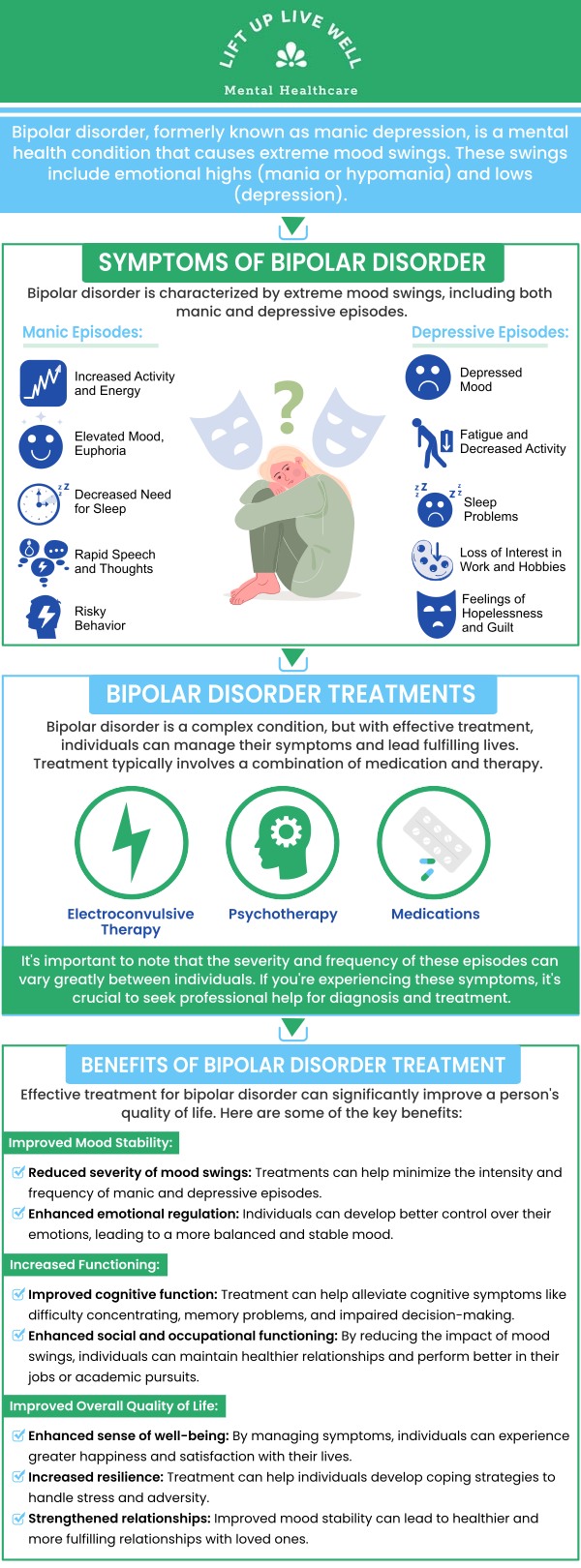
Table of Contents:
What is involved in a bipolar disorder evaluation?
What types of tests are used to assess bipolar disorder?
How long does a bipolar disorder evaluation take?
What questions might I be asked during a bipolar disorder evaluation?
What Can I Expect During a Bipolar Disorder Evaluation with a PMHNP in New York, NY?
A bipolar disorder evaluation is a thorough assessment conducted by a mental health professional to determine whether someone’s symptoms align with bipolar disorder—a mood condition characterized by shifts between elevated moods (mania or hypomania) and periods of depression.
Unlike a simple checklist, a bipolar evaluation is a comprehensive process that considers your emotional experiences, behavior patterns, past history, lifestyle, and functioning. The purpose is not just to identify symptoms but to understand how these symptoms affect daily life, relationships, sleep, energy, thinking, and decision-making over time.
During the evaluation, you can expect a blend of clinical observation, structured questionnaires, detailed conversations, and, when appropriate, input from family members or caregivers. The goal is to build an accurate picture of your mood history, including the frequency, duration, and intensity of mood swings—and to differentiate bipolar symptoms from those of depression, anxiety, or other conditions.
There isn’t a single “bipolar test” like a blood test or scan, but clinicians use several validated assessment tools and methods to guide diagnosis. These may include:
Clinical Interviews: The core of the evaluation is where you discuss your feelings, behaviors, and experiences in detail. This structured conversation helps identify patterns consistent with bipolar disorder.
Standardized Screening Tools: These are questionnaires designed to capture specific mood symptoms, such as:
● Mood rating scales
● Checklists for manic and depressive symptoms
● Questionnaires about energy, sleep, irritability, and impulsivity
These tools help quantify symptom presence and severity and are especially useful for tracking changes over time.
Psychological Assessments: If needed, additional psychological testing may be used to assess cognitive functioning, emotional regulation, or co‑occurring conditions.
Medical History Review: Because mood symptoms can be influenced by medical conditions or medications, clinicians review your physical health history and may recommend lab tests or referrals to rule out medical causes (such as thyroid issues, vitamin deficiencies, or neurological conditions).
Collateral Information: With your permission, input from family members or close friends can offer additional perspective on behaviors that you may not notice or report.
The goal is to gather a full set of data that reflects your emotional and behavioral functioning across contexts and over time.
The length of a bipolar disorder evaluation can vary depending on your history, the complexity of symptoms, and whether additional testing is needed. Typically:
● Initial evaluation: 60–90 minutes
● Follow‑up visits: 30–60 minutes
● Extended or multidisciplinary assessments: may include multiple sessions over several weeks
An initial session is generally more in‑depth because it sets the foundation for diagnosis and treatment planning. Follow‑ups allow the clinician to clarify details, review screening results, and answer questions as you reflect on your experiences.
Because bipolar symptoms can span years or even decades, clinicians take the time to explore patterns and nuances—aiming for accuracy rather than speed.
During an evaluation, you may be asked detailed questions about your mood, behavior, and daily functioning. These help the clinician differentiate bipolar disorder from depression, anxiety, personality disorders, or other mental health concerns.
Common areas of inquiry include:
Mood History
● Have you experienced periods of unusually elevated mood, energy, or activity?
● How long do these mood shifts last?
● Do these changes interfere with your daily life, sleep, or relationships?
Depressive Symptoms
● Are there episodes of prolonged sadness, low motivation, or loss of interest?
● Do you experience changes in appetite or sleep?
● Have you had thoughts of self‑harm or hopelessness?
Manic or Hypomanic Symptoms
● Have others noticed that you talk faster, take risks, or act impulsively?
● Do you feel like you need less sleep but still have high energy?
● Have you engaged in behaviors that were out of character and had consequences?
Functional Impact
● How do mood changes affect your work, school, or social life?
● Has your mood ever led to legal, financial, or interpersonal problems?
Family History
● Is there a family history of bipolar disorder, depression, or other mood conditions?
Medical and Medication History
● What medications have you taken, and how did they affect your mood?
● Have physical health issues influenced your emotional health?
These questions help build a complete picture and distinguish bipolar patterns from other mood variations.
At Lift Up Live Well Mental Healthcare, evaluations are designed to be supportive, thorough, and collaborative. The process typically includes:
● A Warm Welcome and Introduction: Your initial visit begins with a conversation about your concerns and what brought you in. We strive to create a safe, non‑judgmental space where you can speak openly.
● Detailed Symptom Review: You’ll be guided through a review of current and past symptoms—including mood patterns, sleep changes, energy levels, and emotional experiences. This includes both structured questions and open dialogue, so you feel heard and understood.
● Standardized Assessments as Needed: Depending on your symptoms, we may use screening tools to clarify symptom patterns and severity. These tools complement clinical conversation and help inform diagnosis and treatment.
● Medical and Lifestyle Context: Your physical health, medication history, substance use, stressors, and lifestyle are considered because all of these impact mood and behavior.
● Collaborative Diagnosis and Next Steps: After synthesizing all information, we discuss possible diagnoses—explaining what each means and how it fits your history. If bipolar disorder is identified, we outline a tailored treatment plan that may include therapy, medication, lifestyle strategies, and ongoing monitoring.
● Shared Decision‑Making: Treatment is never one‑size‑fits‑all. You are encouraged to ask questions, express preferences, and participate actively in planning.
● Ongoing Support: Because mood disorders often evolve, we schedule follow‑ups to monitor progress, adjust treatment, and ensure that care aligns with your evolving needs. For more information, contact us or schedule an appointment online. We serve patients from Murray Hill NY, Manhattan NY, Lower Manhattan NY, Harlem NY, Hell’s Kitchen NY, Lenox Hill NY and surrounding areas of New Jersey.

ADDITIONAL SERVICES YOU MAY NEED

ADDITIONAL SERVICES YOU MAY NEED



 Send Text
 How May I Help You?